

Free Shipping On Orders Above $60!

Powered by Developer Arena

How Do I Do My Own Brazilian Wax? (Step-by-Step)

How Do I Do My Own Brazilian Wax? (Step-by-Step)

What Exactly Is Brazilian Waxing?

Brazilian waxing is like bikini waxing, but more extensive. It involves continued hair removal beyond the bikini line, typically resulting in the removal of most or all hair in the intimate area. In many cases, a small strip of hair known as a “landing strip” may be left, depending on personal preference.

This type of waxing is more advanced and requires patience, comfort with the process, and a degree of flexibility, as it involves working in more sensitive and harder-to-reach areas. For this reason, we do not recommend attempting a Brazilian wax at home if you are new to waxing, as it requires confident technique, particularly with hot wax application and removal.

Even many experienced at-home waxers who are comfortable with other areas still choose to have Brazilian waxing done professionally due to the precision involved. However, for those who are already confident and experienced with at-home waxing and want to take things further, Brazilian waxing can be approached with the right preparation and technique.

Doing Your Own Brazilian Wax

It has to be Hot Wax (a.ka. Hard Wax) for Brazilian waxing.

Why Hard Wax Is Essential for This Area

For this area, it is strongly recommended to only use hard wax. If you are visiting a salon, it is worth confirming in advance that they are using a hard wax for the procedure, as this is an important factor for both comfort and effectiveness.

Within the Parissa range, the Strip-Free Hot Wax (Hard Wax) is specifically designed for this purpose. Formulated with beeswax, it adheres more to the hair than to the skin, which helps make the process gentler on sensitive areas.

Hard wax is applied in a liquid state and then firms as it cools. As it sets, it encapsulates the hair, gripping it firmly for removal. This makes it particularly effective for short or coarse hair, as well as delicate skin areas where precision and reduced skin adhesion are important.

Parissa Brazilian Hot Wax

Shop: Parissa Hot Wax

Before Doing Your Own Brazilian Wax

1. Use a Wax Warmer to Control Temperature

For this type of waxing, maintaining a consistent wax temperature is essential, which is why a dedicated wax warmer is highly recommended.

A device like the Parissa Wax Warmer offers a stable, portable way to heat and maintain hot wax without needing to repeatedly return to a stove. Simply plug it in and place the wax inside to begin melting. Once the wax is partially melted, stir it with a spatula to ensure an even consistency.

The ideal working texture is a thick, honey-like consistency. At this stage, the wax can be removed from the warmer for application. As it begins to cool and thicken during use, it can be placed back onto the warmer briefly to restore the correct texture.

A practical approach is to alternate between a few minutes on the warmer and a few minutes off, adjusting as needed to maintain consistency throughout the session.

Before starting, always perform a small test application to check temperature and prevent burns. If the wax appears very runny or overly liquid, it is likely too hot to use safely.


Parissa Hot Wax Pods with Wax Warmer

Shop: Parissa Wax Warmer

2. Start With the Bikini Area First

The most challenging part of a Brazilian wax is not the application, but the removal technique. For this reason, it is best to begin with the bikini line if you are unsure about your comfort level or technique.

Work gradually and in small sections as you move toward more sensitive areas. This allows you to assess how the wax is performing and how your skin is responding before progressing further.

Avoid applying wax over large areas too quickly. If removal is not yet consistent or comfortable, working in smaller patches will give you more control and reduce the risk of irritation or ineffective results.

3. Apply a Fine Layer of Oil or Talc Powder Before Waxing

This step can help improve comfort and reduce redness during waxing. Depending on your skin type, you may find that one method works better than the other, so it is worth experimenting to see what suits you best.

For those who tend to sweat easily or experience moisture from sensitivity or pain response, a light layer of talc powder can be helpful. Keeping the skin dry allows the wax to grip the hair more effectively, improving overall results. If sweating is not a concern, a very light layer of oil can also be used. This must be applied sparingly. One method is to apply a small amount of Azulene Oil to a cotton pad, gently spread it over the area, and then lightly blot with a tissue. This leaves behind only a minimal residue.

Parissa Hot Wax is oil soluble, meaning it can still adhere effectively to the hair even with a fine oil layer present. In this case, the oil acts as a protective barrier for the skin during removal, helping to reduce discomfort.

Please note that these techniques are not suitable for use with sugar-based wax, as they can interfere with its performance.

DURING WAXING

1. Apply the Wax in the Direction of Hair Growth

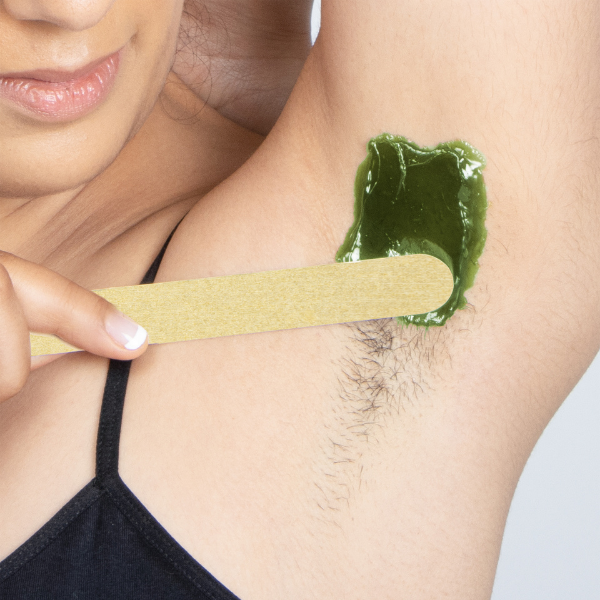
When working with short or coarse hair, hot wax should be applied in the same direction that the hair grows. This technique helps the wax better lift and grip shorter hairs from the root, improving overall effectiveness.

Once applied, the wax should still be removed in the opposite direction of hair growth, as with other waxing methods. This combination of application and removal direction helps achieve cleaner results and is particularly effective for Brazilian waxing.

2. Apply a Thick Layer of Wax with Rounded Edges

Hot wax requires a different application technique compared to other wax types. It should be applied in a thicker layer to ensure proper removal.

The edges should be rounded and slightly reinforced, as this creates a strong “grip point” for lifting the wax. Once the edge is lifted, it allows for a smooth and controlled removal of the entire section in one motion.

It can also be helpful to slightly overlap the wax onto areas without hair. This prevents the wax edge from catching individual hairs prematurely when lifting, which can reduce discomfort and improve control during removal.

3. Work in Small Sections

It is important not to be overly ambitious, especially when doing a Brazilian wax for the first time. Working in small sections, approximately the size of a couple of postage stamps, allows for better control and more precise application.

Smaller areas also make it easier to maintain proper technique, including keeping the skin taut during removal. Always pay attention to the direction of hair growth within each section and work accordingly for the best results.

4. Always Keep the Skin Taut and Hold Firmly

Brazilian waxing involves working with areas of very flexible skin, which requires careful handling throughout the process. Keeping the skin firmly stretched is essential for both comfort and effectiveness.

This step is often the most challenging part of at-home Brazilian waxing, as it can be difficult to manage without assistance. Working in small sections helps create a flatter surface, making it easier to maintain control during removal.

Keeping the skin taut also helps reduce the risk of bruising or unnecessary discomfort. Avoid waxing over areas where the skin is folded or bent, as this can affect both results and comfort.

AFTER WAXING 

When you have finished waxing, don’t forget that any excess wax for Parissa Hot Wax can be removed with the Ultra Soothe Oil, or other gentle oils like mineral oil, baby oil. Follow our Waxing 101 tips for all waxing:

  • Don’t wax before or after strenuous exercise.
  • Follow the 2 week rule, at least 2 weeks of hair growth.
  • Trim down longer hair for ease of applying the wax.
  • Make sure you have everything you need at hand before starting.
  • Don’t wax over irritated, red or broken skin.
  • Don’t wax over the same area more than once in a single session.
  • Always do a 24 hour patch test (allergy check) before using a Parissa product for the first time.

FAQ: Do-Your-Own Brazilian Wax 101

Is a Brazilian wax very painful?

Waxing removes hair from the root, so it is normal to experience some level of discomfort. However, this sensation is typically brief, lasting only a few seconds, while the results can last for several weeks. With regular waxing, discomfort often decreases over time as the hair grows back finer and becomes easier to remove.

If you are feeling nervous, it can help to start with less sensitive areas such as the arms or legs before progressing to the bikini line. Becoming comfortable with the process can make the experience more manageable overall.

Tips for making bikini waxing less painful

Use a high-quality wax
Choose a wax that is both effective and gentle, especially for sensitive areas.

Allow sufficient hair growth
Avoid shaving and ensure hair is long enough for waxing, ideally around 2 mm, so the wax can properly grip the hair.

Breathe and relax
Although it may feel counterintuitive, staying relaxed can help reduce tension in the skin and make the waxing process feel easier and more controlled.

Ready to Wax Naturally?

Parissa’s natural waxes are crafted for sensitive skin, coarse hair, and conscious self-care. Whether you choose to wax at home or in a salon, we’re here to support your smooth journey — every step of the way.

·      Clean beauty. Cruelty-free. Thoughtfully made in Canada.
Because your routine should feel as good as your skin.


Shop Parissa Hot Wax Kits
Explore More Waxing Tips
Have a question? Our team is here to help

Leave a comment (all fields required)

Comments will be approved before showing up.

Threading, tweezing and waxing are the most common techniques used to remove unwanted hair, but which method is best? 

  • 3 min read

While a full-body wax usually refers to everything below the neck, some would include facial waxing in their definition. If you’re used to removing your body hair, you probably have used many different techniques for various parts of your body.

  • 4 min read

Anyone who has ever dabbled in hair removal understands the frustration that is ingrown hairs! Despite our best efforts for smooth, clear skin none of us are immune to these itchy, uncomfortable, and sometimes painful red bumps. The good news is, there is solution!

  • 2 min read

This guide breaks down the most common issues users face, such as wax stretching, cracking, or becoming too runny, and shows how small adjustments in cooling time, application thickness, and temperature can make a major difference.

  • 2 min read

You Got This. And We Got You.

If you run into trouble or have any questions, visit our FAQs or contact us directly and we'll be happy to help you out.
Search
Commonly searched